About
A room at the end of a lane.
Linda Kane
Painter, printer, and — three days a week — shopkeeper.
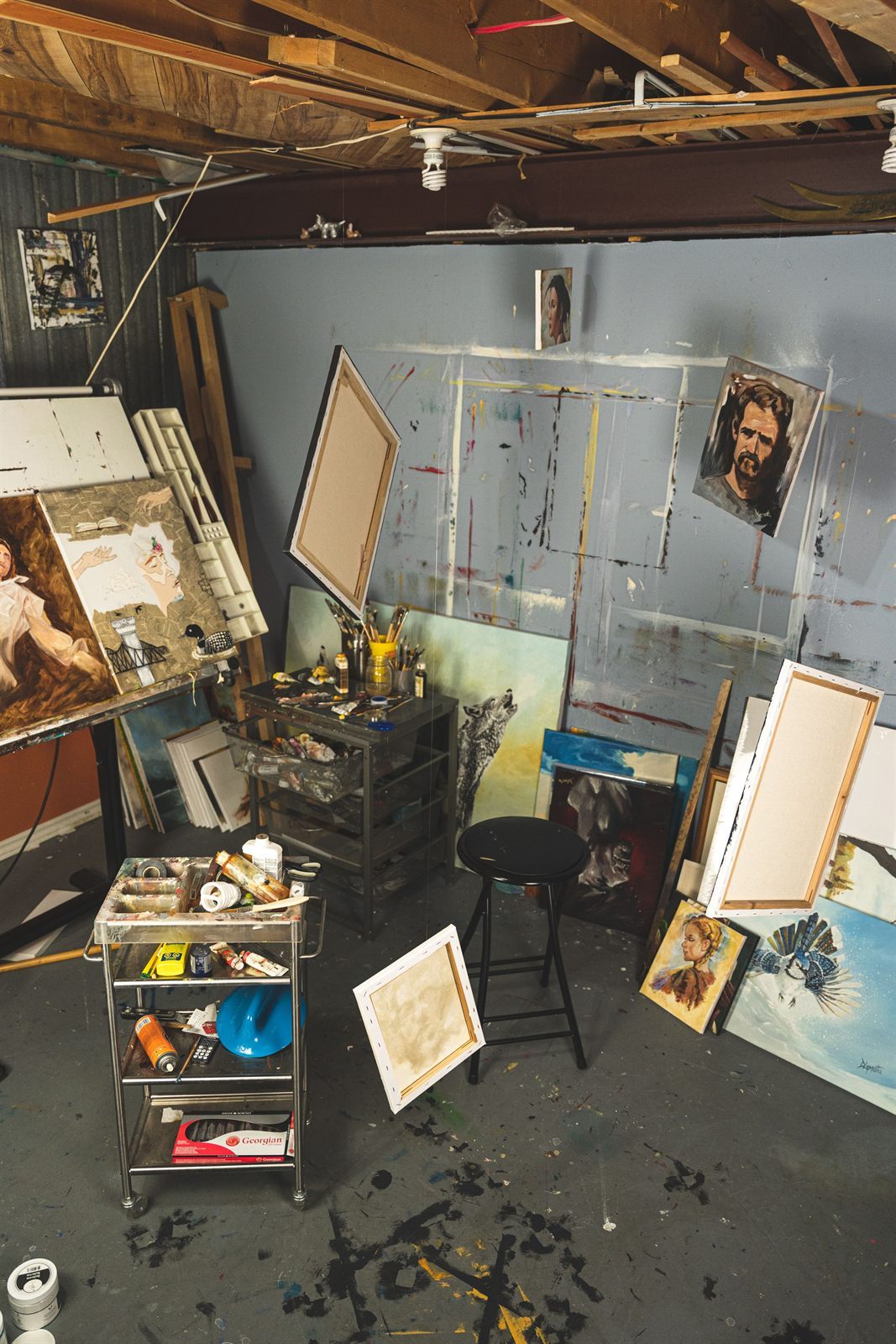
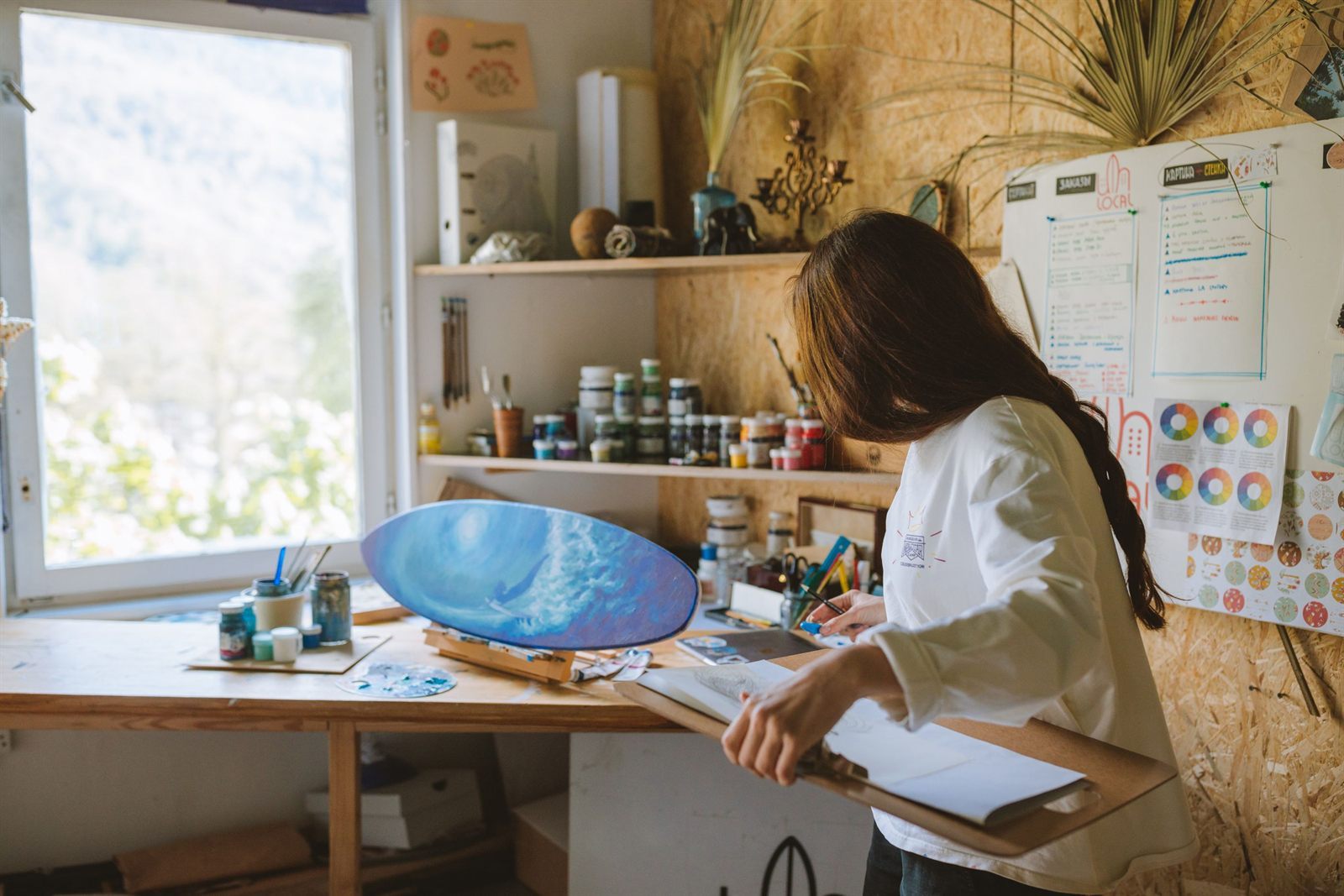
Linda Kane has painted from the same studio since 2009 — a single long room behind a joinery, with north light at one end and a press at the other. She trained as a printmaker, came to painting late, and still approaches a canvas the way a printer approaches a plate: in layers, with a lot of removal.
The work is abstract but not arbitrary. Each series begins with a place — a harbour, a wall, an hour of the afternoon — and then spends a year getting further away from it. By the time a painting is finished the subject has usually gone, and what is left is a temperature and a structure.
She works in oil on linen for the larger canvases, acrylic and squeegee for the faster ones, and oil on small boards at the end of a day when there is paint left on the palette. Those small boards, which she calls the offcuts, are the pieces visitors ask about most.
The store came later and by accident. Cards printed as thank-you notes for collectors turned into a run for a local shop; a habit of stringing beads while paintings dried turned into a bench. None of it is licensed or manufactured elsewhere — if it is on this site, it was made in that room.
Process
How the work gets made
01 — Ground
A saturated field goes down first and is left to set hard. It will be almost entirely destroyed later, but everything that follows is measured against it. Kane mixes her blacks and whites rather than using them from the tube, which is why the darks in the paintings read blue in daylight.
02 — Removal
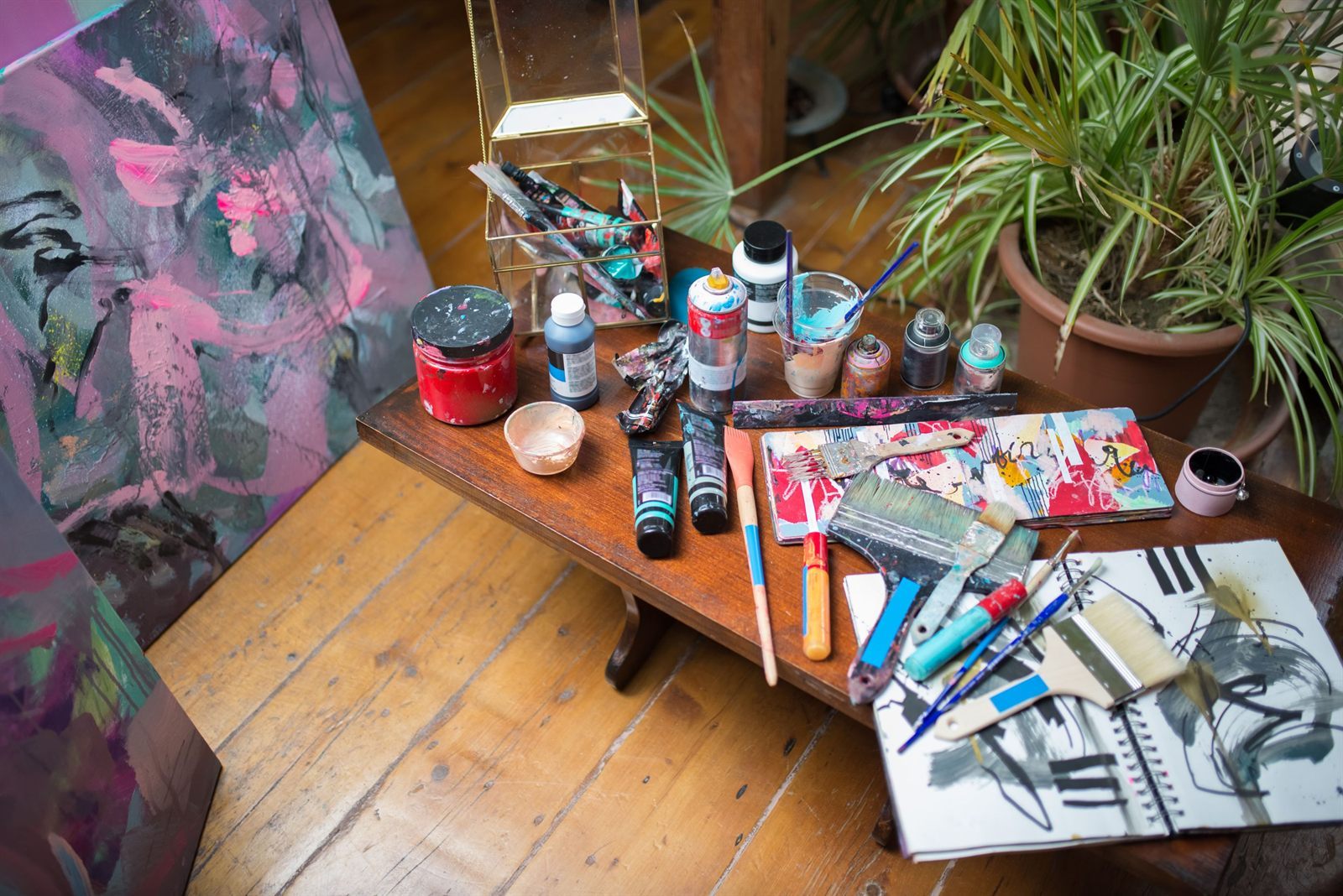
Blades, rubber graining combs, perspex offcuts and rags. More paint leaves a Kane canvas than stays on it. What survives is whatever the tool could not reach — corners, weave, the ridge along an earlier edge.
03 — Last marks
The final day of a painting produces perhaps six marks. They are opaque, they are not corrected, and they are the only part of the picture made at full speed. If they are wrong the painting goes back to the wall for a month.
Selected exhibitions & stockists
Where the work has been
- 2025
- Water Line — solo, Marsh Lane Studio
- 2024
- Quiet Ground — two-person, Fold Gallery
- 2024
- Regional Painting Prize — shortlist
- 2023
- Small Rooms — studio open week
- 2022
- Paper Weather — works on paper, Ink & Board
- Stockists
- Cards and prints held by five independent shops and two museum stores